
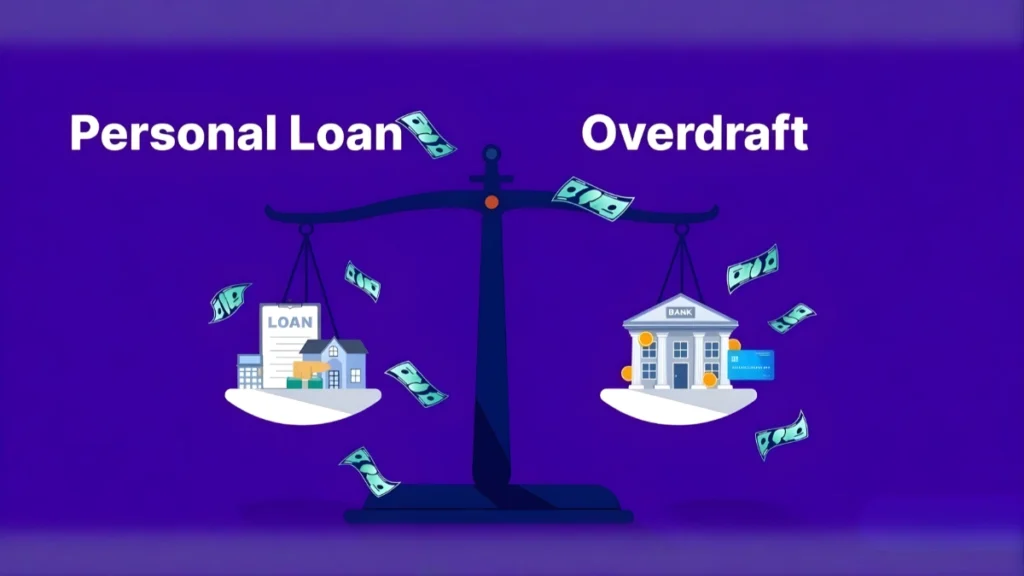
When you need quick funds for personal expenses, business needs, or emergencies, two common financing options in India are personal loans and overdraft facilities. Both options provide access to funds, but they work in very different ways.
Understanding the differences between these two borrowing options can help you choose the right one based on your financial needs. This guide explains personal loan vs overdraft, their features, advantages, and which option may be better depending on your situation.
What Is a Personal Loan
A personal loan is an unsecured loan provided by banks or NBFC lenders that you repay through fixed monthly installments over a specific tenure.
Key characteristics include:
Fixed loan amount
Fixed interest rate in many cases
Fixed EMI every month
Predefined repayment tenure
Personal loans are commonly used for:
Medical expenses
Travel and vacations
Home renovation
Education expenses
Debt consolidation
These loans usually have a tenure ranging from 1 year to 5 years or more, depending on lender policies.
What Is an Overdraft Facility
An overdraft is a credit facility linked to your bank account, allowing you to withdraw money even if your account balance is insufficient.
Instead of receiving a lump sum loan, the bank provides a credit limit, and you can withdraw funds whenever needed.
Key features include:
Flexible borrowing up to a pre-approved limit
Interest charged only on the amount used
No fixed EMI structure in many cases
Suitable for short-term cash flow needs
Overdraft facilities are often used by businesses, professionals, and individuals with fluctuating income.
Key Differences Between Personal Loan and Overdraft
1. Loan Structure
Personal Loan
Borrower receives the entire loan amount upfront.
Overdraft
Borrower withdraws money as needed within the approved limit.
2. Interest Charges
Personal Loan
Interest is charged on the entire loan amount.
Overdraft
Interest is charged only on the amount actually used.
3. Repayment Method
Personal Loan
Fixed EMIs must be paid every month.
Overdraft
Flexible repayment depending on usage and balance.
4. Loan Tenure
Personal Loan
Fixed tenure determined during loan approval.
Overdraft
No strict tenure, credit limit can be used repeatedly.
5. Best Use Case
Personal Loan
Better for planned expenses requiring a fixed amount.
Overdraft
Better for short-term financial needs or irregular cash flow.
Advantages of Personal Loans
Fixed repayment structure
Higher loan amounts available
Predictable EMI payments
Suitable for long-term financial needs
These loans are easier to plan because monthly payments remain constant.
Advantages of Overdraft Facility
Interest charged only on used funds
Flexible withdrawal and repayment
Useful for short-term cash flow gaps
Credit limit can be reused
This makes overdraft ideal for businesses and professionals with variable income.
Disadvantages of Personal Loans
Interest charged on full loan amount
Less flexibility in repayment
Prepayment charges may apply
Borrowers must follow the fixed repayment schedule.
Disadvantages of Overdraft Facility
Interest rates may be higher than secured loans
Credit limit may be smaller than personal loan amount
Misuse can lead to higher borrowing costs
Overdraft should be used carefully to avoid excessive interest.
When to Choose Personal Loan
A personal loan may be better if:
You need a large fixed amount
You want predictable EMI payments
You are planning long-term expenses
You prefer structured repayment
Examples include education expenses, home renovation, or medical emergencies.
When to Choose Overdraft
An overdraft facility may be better if:
You need short-term funds
Your income is irregular
You want flexible borrowing
You only need funds occasionally
Examples include business cash flow gaps or temporary financial shortages.
Factors to Consider Before Choosing
Loan amount required
Repayment flexibility needed
Interest rates and charges
Income stability
Purpose of borrowing
Comparing these factors can help determine the most suitable option.
Frequently Asked Questions (FAQs)
Is overdraft cheaper than personal loan?
Overdraft may be cheaper if you borrow small amounts for short periods because interest is charged only on the used amount.
Can salaried employees get overdraft facility?
Yes, some banks provide overdraft facilities linked to salary accounts.
Which is better for emergencies: personal loan or overdraft?
Both can work for emergencies, but overdraft may be useful for short-term needs while personal loans are better for larger expenses.
Does overdraft affect credit score?
Yes, overdraft usage and repayment behavior may affect your credit score.
Conclusion: Personal loans and overdraft facilities both provide access to funds but serve different financial needs. Personal loans are suitable for larger planned expenses with fixed repayment schedules, while overdraft facilities provide flexible borrowing for short-term cash flow needs. Choosing the right option depends on your financial situation, borrowing requirement, and repayment ability.
Disclaimer: This article is for informational purposes only and does not constitute financial advice. Loan terms, interest rates, and eligibility conditions vary depending on lender policies and borrower profile. Always review the latest terms before choosing any financial product.